
Why Nerve Damage Is About More Than Just Blood Sugar
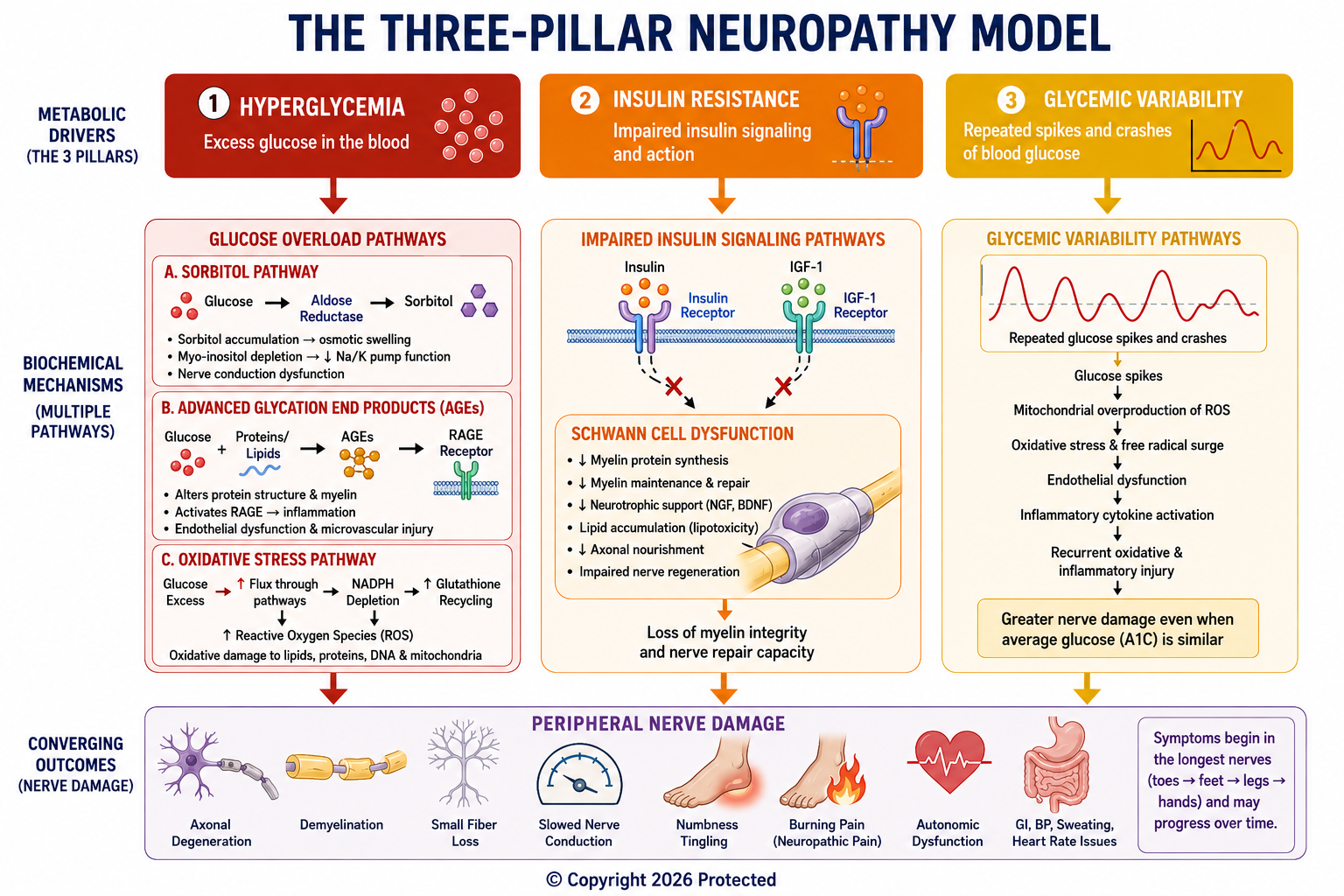
Peripheralneuropathy is one of the most common complications of metabolic disease, yet itis often misunderstood. Many people are told that neuropathy is simply caused by “high blood sugar.” While high glucose does damage nerves, newer research shows the problem is far more complex. Nerves are often being injured from three directions at the same time
- High blood sugar (hyperglycemia)
- Insulin resistance
- Blood sugar swings (glycemic variability)
Understanding all three mechanisms helps explain why some people continue to develop neuropathy even when their average blood sugar appears “controlled.”
What Is Peripheral Neuropathy?
Peripheralneuropathy refers to damage to the nerves outside the brain and spinal cord. These nerves help control:
- Movement (motor nerves)
- Sensation (sensory nerves)
- Automatic body functions such as heart rate, digestion, sweating, and blood pressure (autonomic nerves)
The most common form associated with metabolic disease affects the longest nerves first. Symptoms usually begin in the:
- Toes
- Feet
- Lower legs
Later, symptomsmay appear in the fingers and hands.
Common symptoms include:
- Tingling
- Burning pain
- Numbness
- Electrical shock sensations
- Loss of balance Reduced vibration sensation
- Weakness
Some patients also develop autonomic symptoms such as:
- Dizziness when standing
- Digestive problem
- Abnormal sweating
- Heart rate irregularities
Why Neuropathy Happens
The Old Theory: “Sugar Damages Nerves”
For decades, the dominant explanation was simple: High blood sugar damages nerves.
This is partly true. However, researchers noticed something important:
- In Type 1 Diabetes (T1DM), aggressive glucose control dramatically reduces neuropathy risk
- in Type 2 Diabetes (T2DM), lowering blood sugar often does not stop neuropathy progression
This suggested that something else was driving nerve damage.
Researchers now recognize that neuropathy in metabolic disease is usually caused by three overlapping mechanisms.
Mechanism #1 — High Blood Sugar
When glucose levels remain elevated, excess sugar floods nerve cells. Unlike many other tissues, peripheral nerves absorb glucose without needing insulin permission. That means when blood sugar rises, nerves cannot protect themselves from glucose overload. This activates several damaging pathways.
A. The Sorbitol Pathway
Excess glucose is converted by the enzyme aldose reductase into sorbitol. Sorbitol becomes harmful because:
- It accumulates inside nerves
- Pulls water into the cells
- Causes swelling
- Depletes important molecules like myo-inositol
- Disrupts nerve electrical signaling
At the sametime, this process consumes NADPH, which the body needs to regenerate glutathione,one of the body’s major antioxidants. This leads to:
- Oxidative stress
- Free radical damage
- Mitochondrial injury
- Nerve dysfunction
B. Glycation and AGEs
Glucose can also chemically attach to proteins and fats. These sticky compounds become: Advanced Glycation End Products (AGEs), that damage nerves in two major ways:
- They distort nerve proteins and myelin structure
- They activate inflammatory receptors called RAGE
This triggers chronic inflammation inside blood vessels and tissues surrounding the nerve.
Mechanism #2— Insulin Resistance
This is one of the most overlooked causes of neuropathy. Nerves do not just need glucose control—they also need healthy insulin signaling.
Special support cells around nerves called Schwann cells depend on insulin and IGF-1 signals to:
- Maintain myelin
- Repair nerves
- Produce protective fats
- Support nerve regeneration
When insulin resistance develops:
- Schwann cells stop responding normally
- Myelin repair decreases
- Nerve healing slows
- Harmful lipid accumulation increases
Even when glucose levels are normal, impaired insulin signaling alone can damage nerves.
This explains why neuropathy can appear in:
- Prediabetes
- Obesity
- Metabolic syndrome
- Insulin resistance without diabetes
Mechanism #3— Blood Sugar Swings
This is called glycemic variability. Two people can have the exact same A1C, yet very different glucose patterns
- One person stays relatively stable
- Another constantly spikes and crashes
Research shows these swings themselves damage nerves. Repeated glucose spikes increase:
- Oxidative stress
- Free radicals
- Inflammation
- Endothelial injury
- Mitochondrial stress
Continuous glucose monitoring (CGM) studies showthat people with greater glucose variability often have worse neuropathy—evenwhen average glucose is similar.
Why Neuropathy Can Start Before Diabetes
One of the mostimportant findings is that neuropathy often begins during:
- Prediabetes
- Insulin resistance
- Metabolic syndrome
before diabetes is officially diagnosed. This means: a “normal” A1C does not always mean nerves are safe. Patients may already have:
- High insulin
- Glucose spikes
- Oxidative stress
- Inflammation
- Early small fiber damage
What Helps Protect Nerves?
According to the metabolic model of neuropathy, treatment should address all three pillars, not just average glucose.
Key Strategies
1. Reduce Glucose Spikes
- Lower refined carbohydrates
- Reduce sugar intake
- Emphasize protein and fiber
- Avoid frequent snacking
2. Improve Insulin Sensitivity
- Resistance training
- Walking after meals
- Weight reduction
- Sleep optimization
- Stress reduction
3. Reduce Glycemic Variability
- Stable meal timing
- Continuous glucose monitoring (CGM) when appropriate
- Avoid large carbohydrate loads
4. Support Nerve Repair
Potential supportive therapies often discussed clinically include:
- Alpha-lipoic acid
- Acetyl-L-carnitine
- Omega-3 fatty acids
- B vitamins (especially B1, B12, benfotiamine)
- Exercise
- Metabolic reabilitation
Final Takeaway
Peripheralneuropathy is not simply a “high blood sugar disease.”
Nerves are often being injured simultaneously by:
- Excess glucose
- Insulin resistance
- Blood sugar instability
This newer understanding helps explain why some people continue to worsen despite “goodA1C numbers.” The encouraging part is that many of the same strategies that improve overall metabolic health can also help protect nerves:
- Improving insulin sensitivity
- Stabilizing glucose
- Exercising regularly
- Building muscle
- Sleeping better
- Reducing inflammation
Neuropathy is not just about lowering sugar.
It is about restoring metabolic health.


